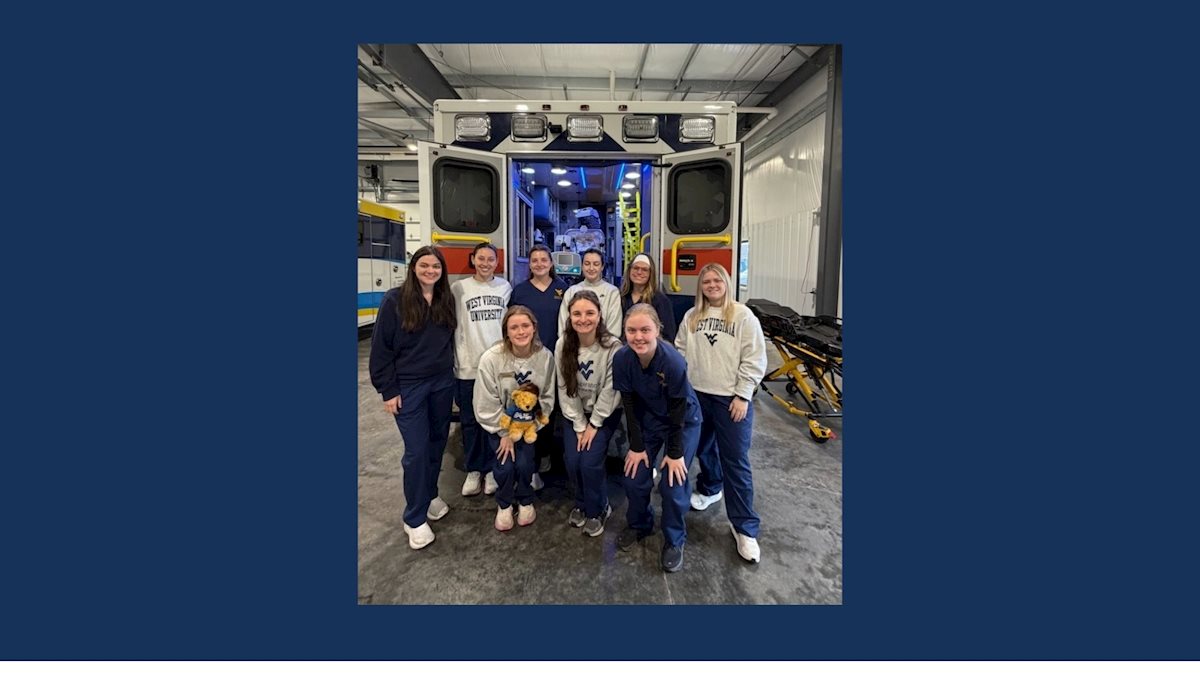
Students in the Respiratory Therapy program at the WVU School of Medicine gained hands-on critical care transport experience through a simulation led by experts from WVU Medicine.
The event, which was named “RT Flight Day,” was conducted by experienced transport respiratory therapists and highlighted the specialized role respiratory therapists play in patient transport, particularly in neonatal and pediatric populations.
“My biggest takeaway from the event was how different respiratory care can look outside of the traditional hospital setting,” said Rachel Behanna, a senior respiratory therapy student. “Seeing the flight team in action really highlighted how critical quick decision-making and adaptability are when resources, space and time are limited. It made me realize how important it is to have a strong understanding of core concepts because, in those situations, you can’t rely on having everything available to you.”
Behanna, who has accepted a position at Allegheny General Hospital in Pittsburgh after graduation, said that hands-on experiences like this have given her the confidence to succeed in her future career.
“Being able to see equipment up close, ask questions, and watch how professionals operate in high-pressure environments makes everything we learn in class feel more relevant.”
During RT Flight Day, students rotated through interactive stations designed to simulate real-world transport scenarios. They refined their skills in infant and pediatric intubation, practiced intraosseous and peripheral IV insertion and participated in patient loading procedures within an ambulance setting.
Students also toured a transport helicopter, allowing them to better understand and practice delivering care in a confined space with limited equipment.
“My goal is to provide a comprehensive and immersive experience by exposing students to a wide range of respiratory therapy environments, including adult and pediatric populations across various acute care settings,” Keleigh Pershina, MHA, BSRT, director of clinical education for the Respiratory Therapy program, said. “The idea for RT Flight Day emerged from this philosophy, creating a unique opportunity for students to experience transport respiratory care, an area they may not otherwise encounter during traditional clinical rotations.”
Pershina explained that WVU Medicine has been an invaluable clinical partner of the Bachelor of Science in Respiratory Therapy program. Through this collaboration, students gain access to diverse, high-quality clinical experiences and the opportunity to work alongside experienced respiratory therapists.
“This collaboration benefits both the students and WVU Medicine by fostering professional development, enhancing clinical competence and creating pathways for employment,” she said. “Many of our students are able to establish connections that lead to job opportunities as they transition into their professional careers.”
The WVU Bachelor of Science in Respiratory Therapy (BSRT) program is one of two BSRT programs in West Virginia, and the only program in the northern part of the state.
To learn more about the Respiratory Therapy program, visit medicine.wvu.edu/respiratory-therapy/.